How Artificial Intelligence Is Quietly Reshaping Energy, Capital, Infrastructure, and the Future of Civilization
Most people think the artificial intelligence revolution is about chatbots. It’s understandable. ChatGPT, autonomous vehicles, generative AI, and machine learning applications dominate headlines and social media conversations. They are visible, accessible, and easy to understand.
But they are not the real story.
The real story is unfolding beneath the surface. It is happening inside data centers, electrical grids, financial markets, infrastructure projects, government institutions, universities, telecommunications networks, and global supply chains. Artificial intelligence is no longer simply a technology sector. It is becoming part of the foundational architecture upon which modern society increasingly operates.
Over the past decade, my work has spanned artificial intelligence, biotechnology, global development, infrastructure, finance, energy systems, and institutional transformation. Through independent research, international projects, and studies at Thunderbird School of Global Management and Arizona State University’s College of Global Futures, I kept arriving at the same realization: What appears to be a collection of separate trends is actually the emergence of a single interconnected system.
Artificial intelligence, energy, capital, infrastructure, governance, and human behavior are converging.
At first glance, these domains seem unrelated. A hydroelectric project in Nepal appears disconnected from an AI model trained in California. A hedge fund in New York appears disconnected from a data center in Arizona. A telecommunications network appears disconnected from a university research program. Yet increasingly, they are all part of the same ecosystem.
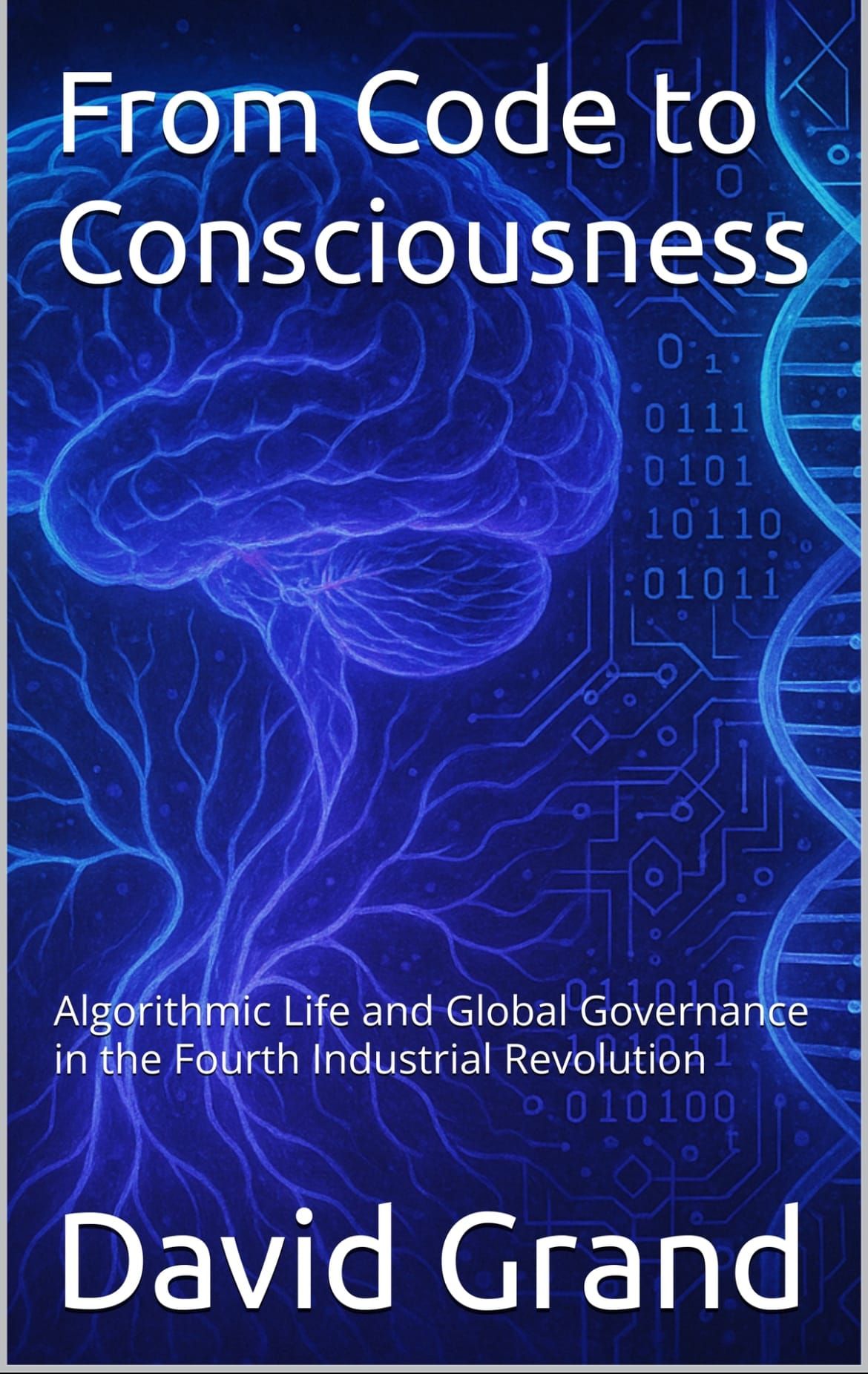
The electricity powering advanced computing systems influences the capabilities of artificial intelligence. Artificial intelligence influences investment decisions. Investment decisions shape infrastructure development. Infrastructure generates new streams of data. That data improves the next generation of intelligent systems. The result is a continuous feedback loop connecting systems that historically operated independently. This realization forms the foundation of what I call the Sovereign Operating System. The concept emerged from many of the same questions explored in my book, From Code to Consciousness. That work was never simply about technology. It was about understanding how information evolves into intelligence, how intelligence influences institutions, and how institutions ultimately shape society itself.
Today, those questions have become increasingly important.
One of the most misunderstood aspects of artificial intelligence is the belief that it exists primarily in the digital world. In reality, intelligence is physical. Every AI model requires computation. Every computation requires servers. Every server requires data centers. Data centers require electricity, cooling systems, telecommunications infrastructure, land, construction materials, and significant capital investment. The cloud may appear invisible, but its foundation is entirely physical. This is why the future of artificial intelligence cannot be separated from the future of energy.
Research conducted through Arizona State University’s Global Futures initiatives, studies focused on infrastructure resilience, and my work examining hydroelectric development opportunities in Nepal all pointed toward the same conclusion, intelligence depends upon energy. Without reliable energy, there is no computation. Without computation, there is no artificial intelligence. Without artificial intelligence, there is no next generation of digital infrastructure.
The race for AI leadership is therefore also a race for energy infrastructure.
This reality is becoming increasingly visible. Governments are investing in grid modernization. Utilities are preparing for rising electricity demand. Technology companies are securing long term energy agreements. Investors are pouring capital into data centers, semiconductors, transmission systems, nuclear technologies, natural gas infrastructure, and renewable energy projects. What appears to be an AI boom is simultaneously an energy transformation. At the same time, capital itself is evolving. For generations, financial institutions largely reacted to events after they occurred. Today, many of the world’s most sophisticated organizations are attempting to anticipate future outcomes by analyzing infrastructure development, energy consumption, logistics networks, supply chains, consumer behavior, geopolitical trends, and computational capacity. Increasingly, capital follows intelligence. The most valuable institutions of the coming decades may not simply be those with the largest balance sheets. They may be those capable of understanding and integrating intelligence, infrastructure, energy, finance, and governance into adaptive systems capable of navigating unprecedented complexity. This represents a profound shift in how power operates. During the Industrial Revolution, power came from manufacturing. During the Information Age, power came from networks and access to information. In the emerging AI era, power increasingly comes from integration. The ability to connect energy systems, computational infrastructure, capital allocation, governance frameworks, and human decision making may become one of the defining competitive advantages of the twenty first century.
This is where the concept of the Sovereign Operating System becomes useful.
It is not a software platform. It is a framework for understanding the architecture emerging around us.
Energy powers computation. Computation generates intelligence.
Intelligence directs capital.
Capital builds infrastructure.
Infrastructure shapes behavior.
Behavior generates data.
Data improves intelligence.
The cycle repeats.
Once viewed through this lens, the connections become impossible to ignore. The race to build data centers, the expansion of energy infrastructure, the modernization of cities, the rise of AI focused investment strategies, the digitization of government services, and the transformation of higher education all begin to look like components of a larger system rather than isolated developments. The question is no longer whether artificial intelligence will transform society. That transformation is already underway.
The more important question is whether our institutions can adapt quickly enough to manage it responsibly.Technology alone will not determine the future. Governance, ethics, leadership, resilience, and institutional design will matter just as much as computational power. The greatest opportunities and perhaps the greatest risks will emerge where these systems intersect.
That intersection is where the work of the Grand Research Institute is focused.
The story of artificial intelligence is not ultimately about machines.
It is about civilization.
It is about how intelligence, energy, infrastructure, capital, and human systems are converging into a new operating architecture for society itself.
Understanding that architecture may prove to be one of the most important challenges and opportunities of our time.
And in many ways, we are only beginning to see it emerge.